
Introduction
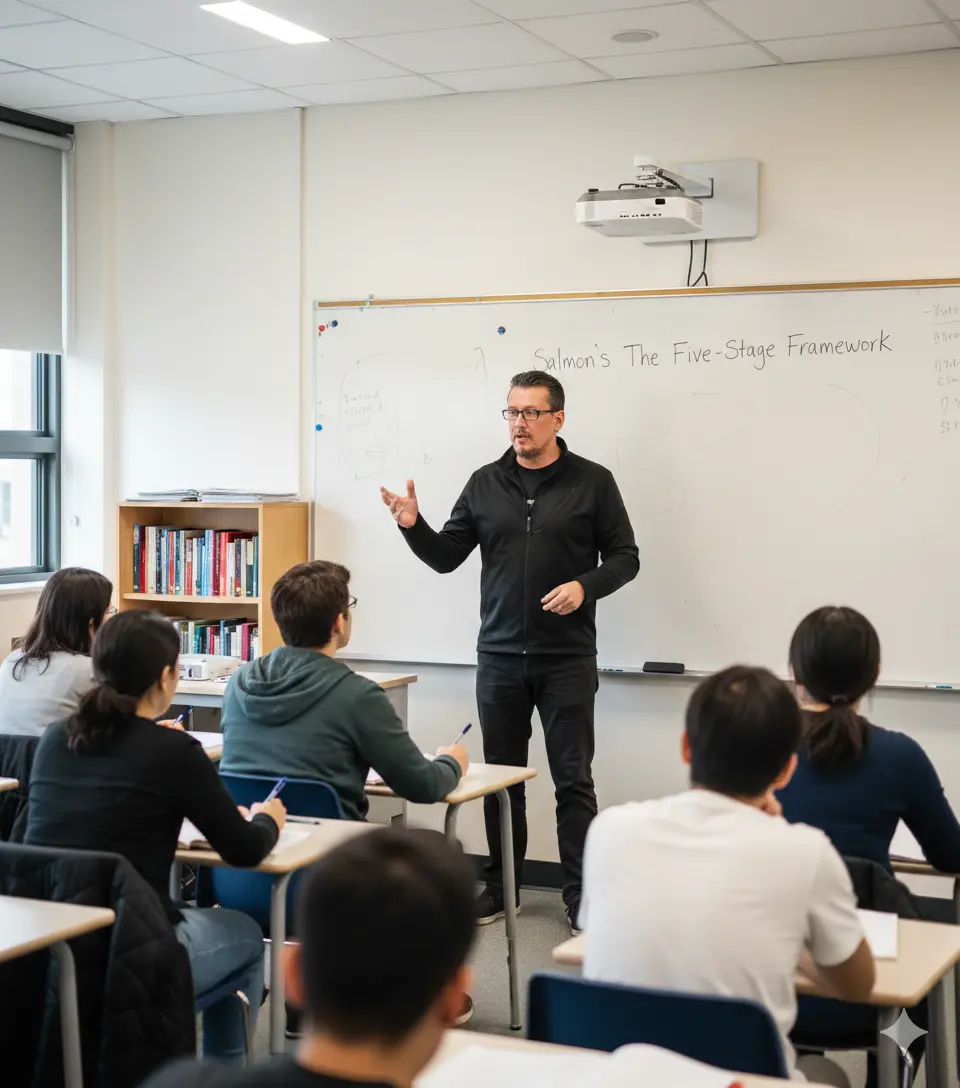
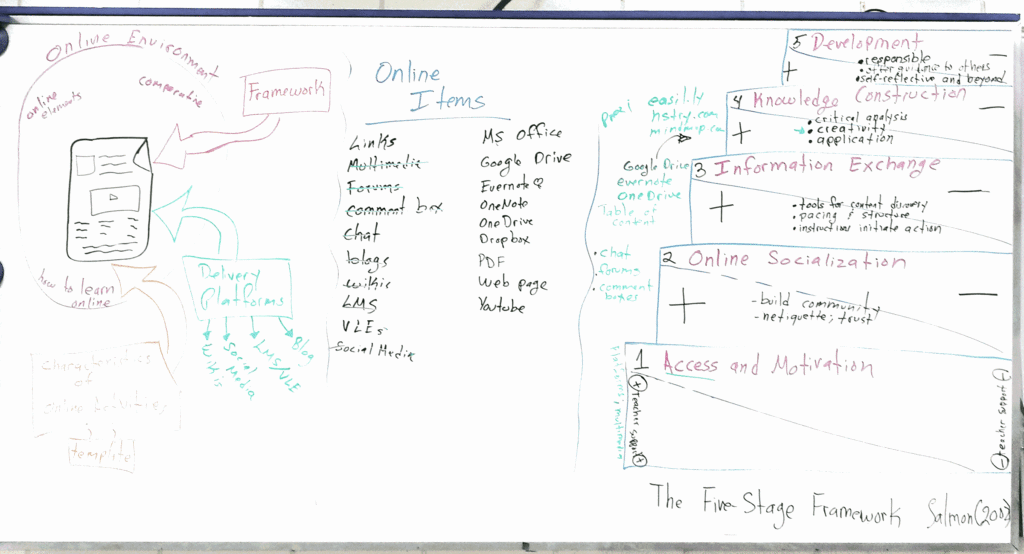
Today I’m sharing an excerpt from a class I gave a few years ago where we explored Gilly Salmon’s Five-Stage Framework. This model is a cornerstone for anyone designing online learning experiences, providing a clear roadmap for how students move from being technical novices to autonomous, collaborative learners. Listen in as we break down each stage and explore what they truly imply for both the teacher and the student.
Stage 1: Access and Motivation
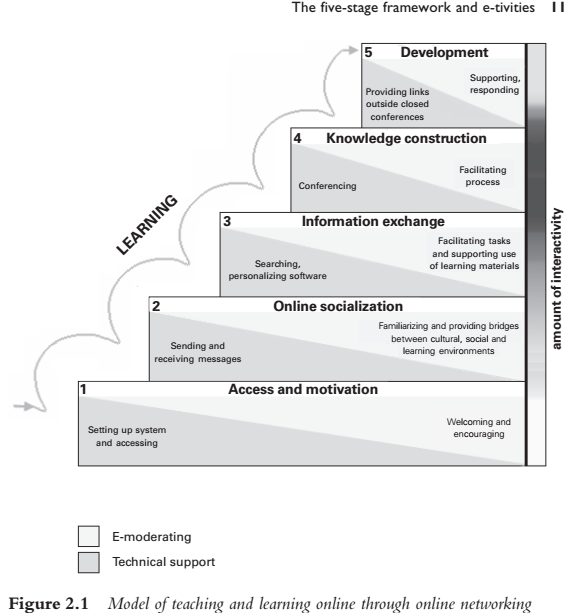
The journey begins with setting up the environment. At this stage, the primary goal is ensuring students can actually get into the system and feel comfortable being there. We want the technology to become “invisible”—if a student is struggling with buttons or download links, learning simply isn’t happening. As instructors, we provide the maximum support here, guiding them through the technical hurdles until they can navigate the space with ease.
Stage 2: Online Socialization
Once the technical barrier is lowered, we focus on building the community. This is where trust is established. Online, we don’t have the luxury of physical presence, so we use avatars, bios, and icebreakers to bridge the gap. The teacher acts as the lead socializer here, encouraging participation and “humanizing” the digital void until students feel confident enough to engage with one another independently.
Stage 3: Information Exchange
With a community in place, we start moving content. This stage is all about the tools of the trade—how we post, share, and download information. Whether it’s using the LMS features or external tools like Google Drive or OneNote, we ensure students have a “Zero Friction” experience with the materials. We might provide tutorials or focused forum support, gradually pulling back as students master the workflows of the course.
Stage 4: Knowledge Construction
This is where the “real” academic work happens. Now that students are comfortable with the tech, the people, and the tools, we can ask for critical analysis. This is the level of summaries, essays, and presentations. We move from just “consuming” information to “working” with it. If we skip the previous stages and jump straight here, students often feel overwhelmed and stuck. Here, the student takes the lead, and the teacher moves into a more facilitative role.
Stage 5: Development
In the final stage, students reach a level of mastery and meta-cognitive growth. They are no longer just learners; they become confident participants who can support others. They’ve mastered the platform, the social dynamics, and the content construction. At this point, the student is highly autonomous, and the teacher’s role is minimal, often just providing the final spark for reflection or looking ahead to the next challenge.
Closing
Understanding this sequence is vital because it respects the cognitive and emotional load of the learner. By following these five stages, we ensure that we aren’t just “uploading content,” but actually scaffolding a journey toward mastery. I hope this look back at our class session helps you visualize how to build a stronger “Human Bridge” in your own online designs.